




 Belgium -
English
Belgium -
English

5 Everyday frustrations physiotherapists have with treatment tables
And How to Solve Them
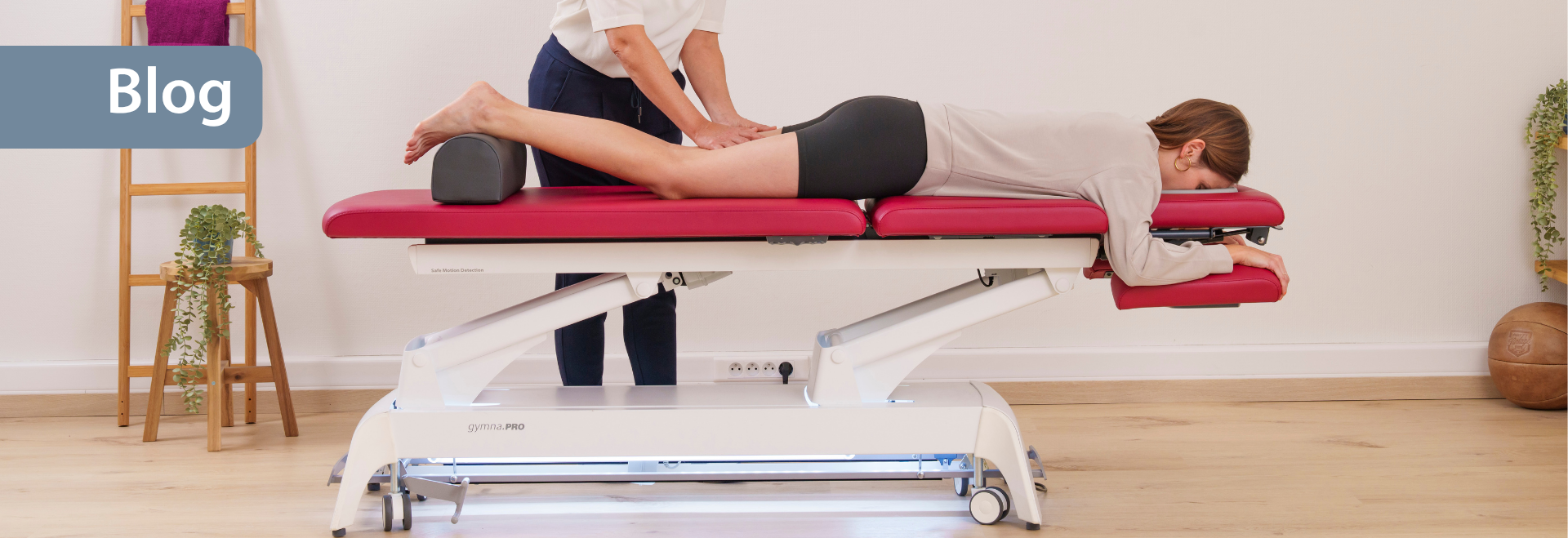
A physiotherapy treatment table should support you in every treatment session, but in daily practice, small frustrations can quickly start piling up. You accidentally move the table up or down, arm supports get in the way, you lose valuable time readjusting your table between patients, or you find yourself constantly making small corrections during an already packed schedule. Individually, these issues seem minor. Together they shape how smooth your treatment runs, how your body feels at the end of the day and how comfortable your patient is throughout the session.
These are not isolated complaints, but recurring points that emerge in day-to-day conversations with physiotherapists. According to Danny van Amelsfoort, Product Manager at Gymna, many of these practical frustrations are linked to how well a treatment table is designed for real clinical use.
“A treatment table should support the therapist, not create extra work. Stability, ergonomics and intuitive movement are essential when you use it every day.”
That’s why choosing the right physiotherapy treatment table isn’t just about features. It’s about removing daily friction from your work.
What should physiotherapists look for in a treatment table?When choosing a physiotherapy treatment table, several key factors directly impact daily practice, therapist comfort, and patient experience: Key considerations when selecting a physiotherapy treatment table:
A good treatment table supports both therapist and patient while lasting for years of daily use. |
Why your physiotherapy treatment table slows down patient positioning
What should be a simple move from lying down to sitting up can quickly become a sequence of turning, guiding, waiting and readjusting. Both for your patient trying to find a stable and comfortable position as for you as a physiotherapist trying to maintain the rhythm of your treatment. While a standard three-section table is versatile and suitable for a wide range of techniques and treatments, this design sometimes creates an unexpected practical challenge.
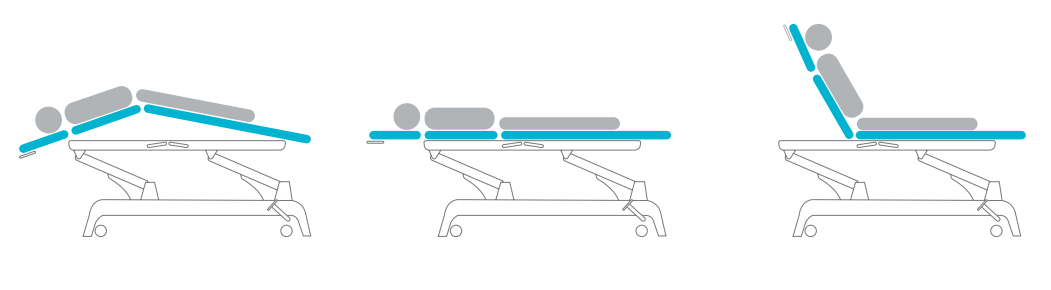
For patients with limited mobility, such as elderly patients or those recovering from injuries, repositioning can be a slow and uncomfortable process that interrupts the natural rhythm of the treatment. For the physiotherapist, this usually means additional hands-on assistance, more physical effort and repeated interruptions to the continuity of the treatment.
A better fit: gymna.PRO treatment tables
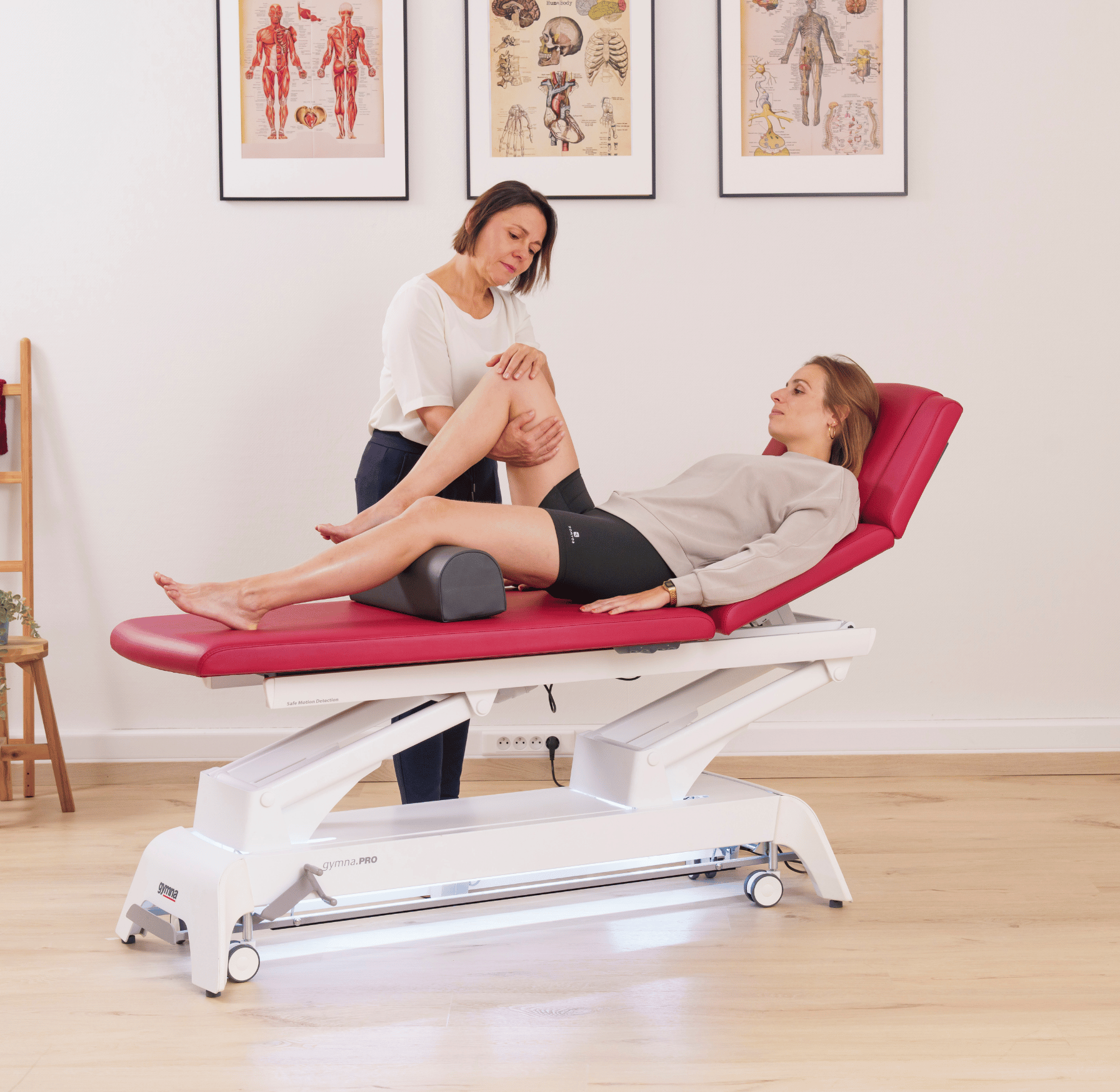
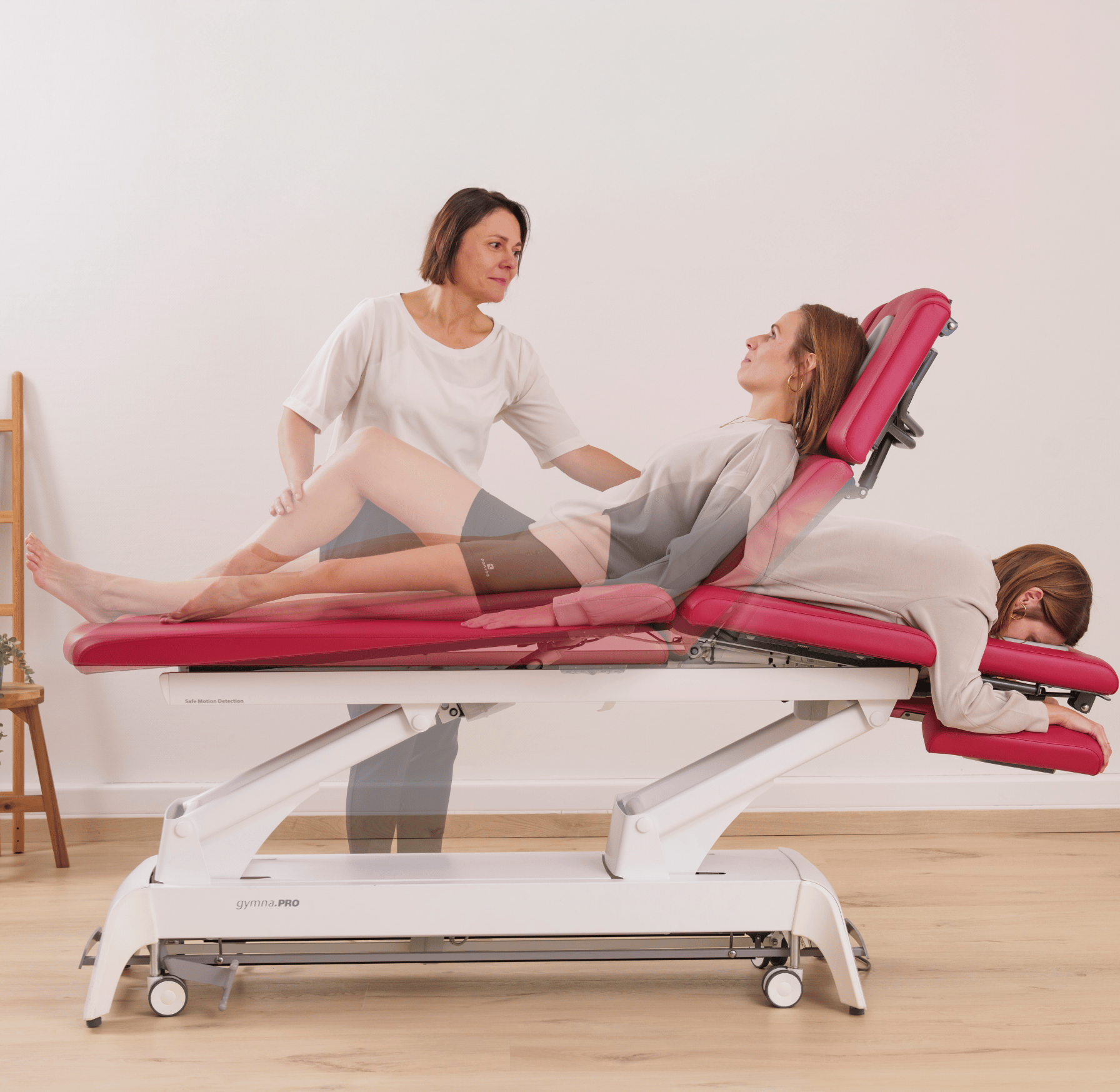
More modern physiotherapy treatment tables, like the gymna.PRO have introduced a smarter way of working through a concept called Constant Patient Position. Instead of asking your patient to repeatedly turn, shift or sit up every time their treatment requires a new position, the table adjusts around the patient while they remain comfortably supported. For physiotherapists, that small design change makes a surprisingly big difference. Less manual lifting and rotating, fewer interruptions and much smoother transitions from lying to sitting or semi-seated positions. This is especially valuable when you’re working with patients who are in pain, recovering from surgery or simply have difficulty moving.
This idea of Constant Patient Positioning, as used in Gymna’s treatment tables, is a subtle design change but one that makes transitions between treatment positions smoother for both therapist and patient.
When helpful physiotherapy treatment table features slow you down
Some features sound useful, but slow you down in practice. In a busy schedule like yours, you don’t want to lose your momentum, valuable treatment time and your focus by stopping for constant table adjustments, resetting positions or navigating unnecessary controls.
Arm supports are a good example. Designed to make prone positioning more comfortable for patients, but in practice, adjusting them often means reaching for multiple knobs, aligning both sides and interrupting your workflow. Over time, many physiotherapists simply stop adjusting them altogether.
A better fit: gymna.PRO treatment tables
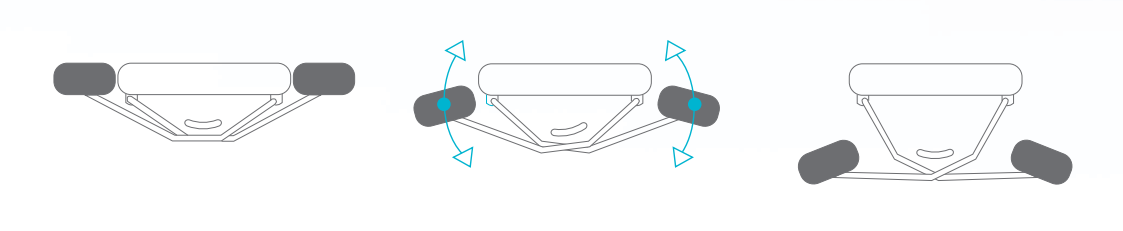
In daily practice, the best solutions are the ones that can be adjusted instantly, without pulling the physiotherapists out of the treatment flow and breaking the contact between them and their patient.
More intuitive physiotherapy treatment tables, like the gymna.PRO simplify this process by allowing both arm supports to move together with one simple action, or fold away completely when they are not needed. Arm supports on gymna.PRO offer:
- Easy-to-use adjustments
- Minimal setup time
- Reliable everyday functionality.
Patient comfort starts with the right physiotherapy treatment table
While physiotherapists focus on functionality and technique, patients notice comfort. Uncomfortable face openings, awkwardly placed seams and worn materials can quickly lead to discomfort during longer treatments. As a result, patients may become less relaxed or feel the need to adjust their position more frequently, which can disrupt the continuity of the treatment.
A better fit: treatment tables with Gymna Ergomax face cushion

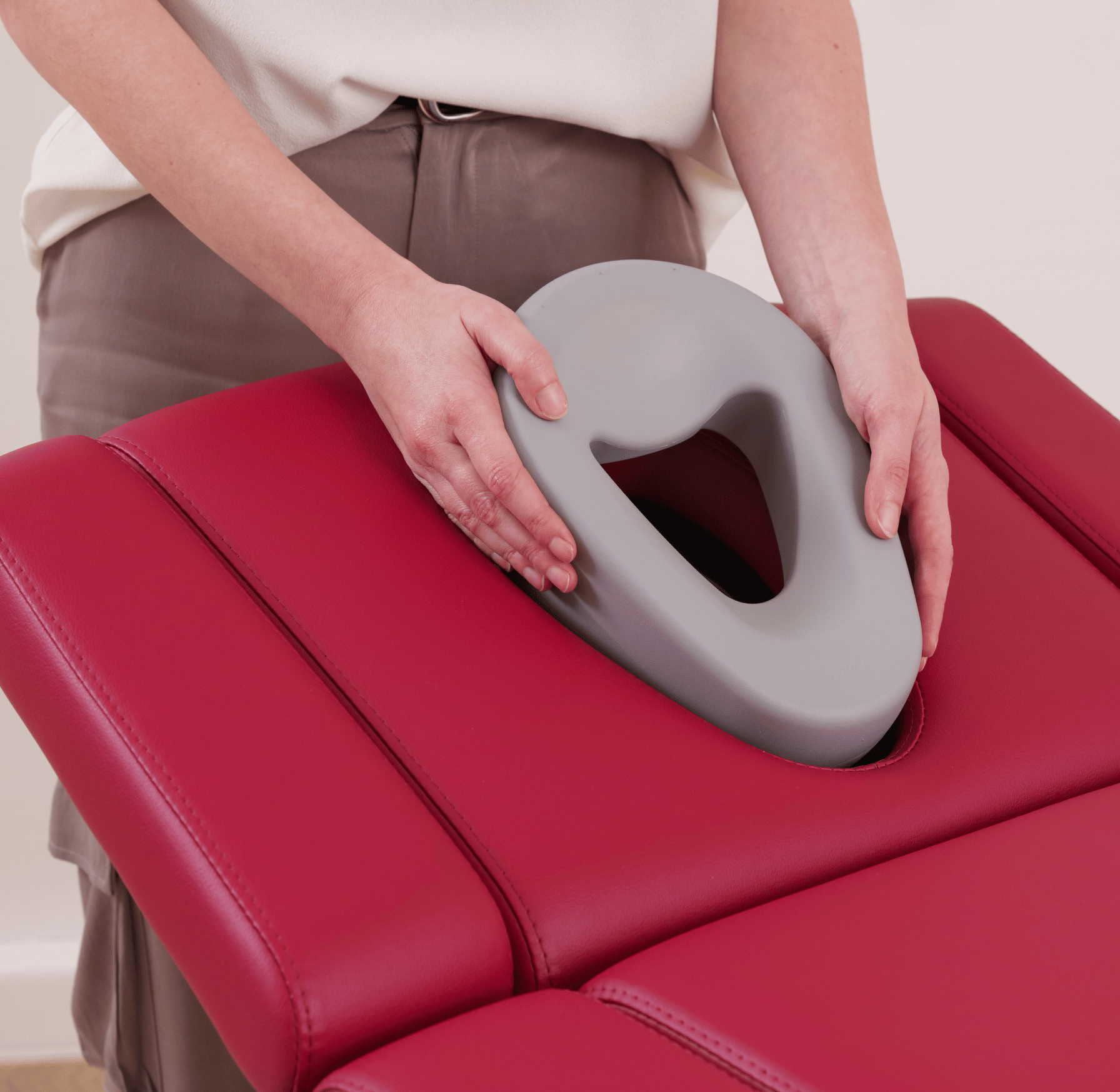
Removable, seamless face cushions provide a simple and practical solution. For example, the Ergomax face cushion used on many Gymna treatment tables changes that experience in a subtle but important way. Designed for flexibility, the cushion can be used in two directions, making it easy to adapt to different patients and their specific head positioning, regardless of height or body type. This allows physiotherapists to adapt the setup quickly to each patient, reduce time spent fine-tuning positioning, and clean the table efficiently between treatments.
Ergonomics: the most important feature of a physiotherapy treatment table
As a physiotherapist, you’re constantly adjusting your posture, leaning in, stepping back, repositioning around your treatment table. If the physiotherapy treatment table’s height cannot be adjusted quickly, those small compromises add up. A slightly bent back here, raised shoulders there, and by the end of the day you feel it. That’s why ergonomic height adjustment is one of the most important features of a physiotherapy treatment table.
A better fit: Gymna.PRO with i-Control
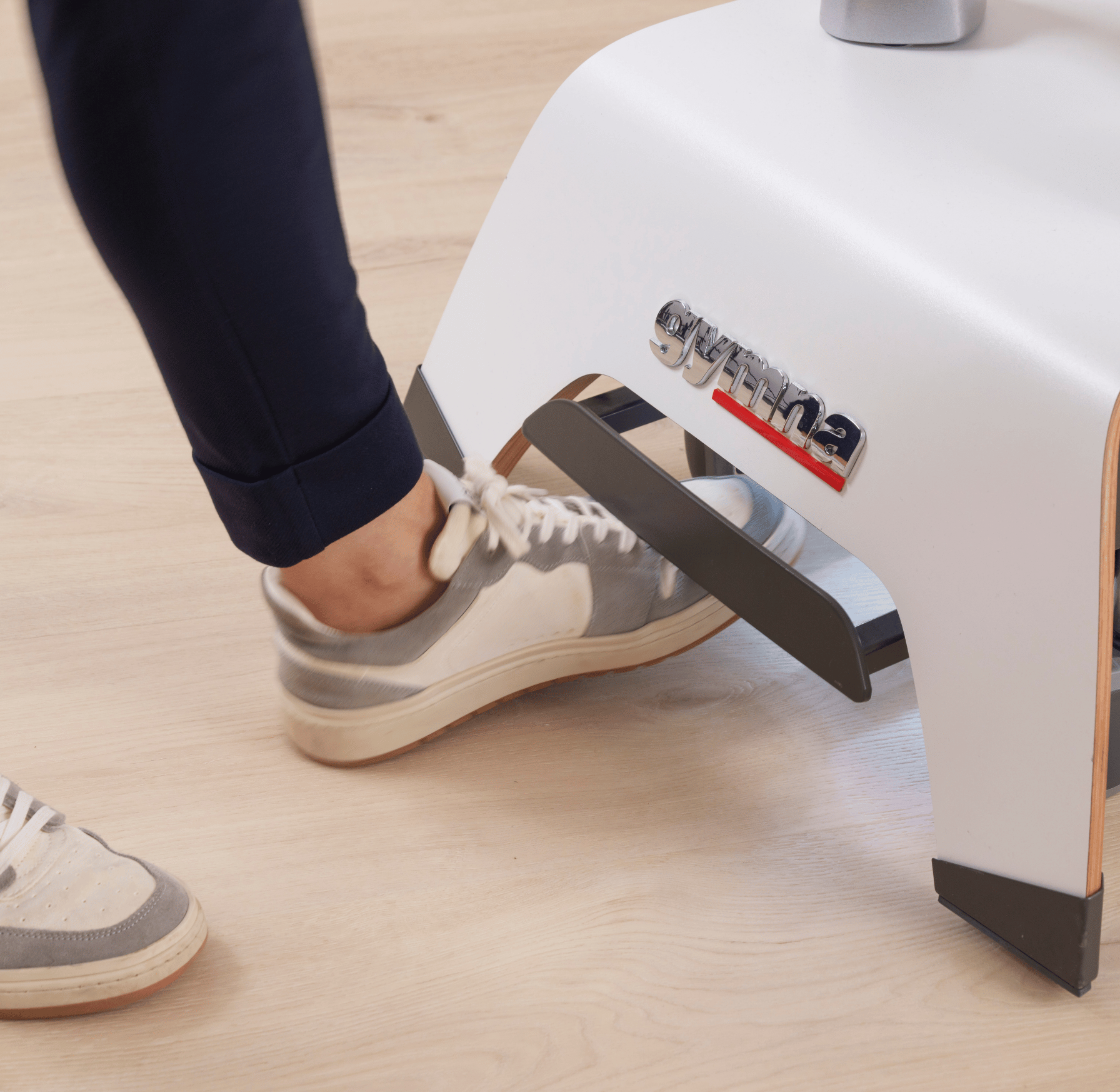
You can adjust the height of your physiotherapy treatment table with a smooth electric height control operated by foot like gymna’s i-Control, a simple electric foot switch or a hydraulic pump system. gymna.PRO with i-Control is designed for ergonomic precision, offering you:
- Hands-free height adjustment
- Smooth, precise control
- Safe operation without accidental activation
How to choose the right physiotherapy treatment table
A table that feels unstable during treatments, upholstery that wears out faster than expected, a mechanism that no longer feel as smooth as they once did, can affect both therapist confidence and patient comfort. That is why it is important to look beyond features and focus on what really matters in daily practice.. Key factors to consider are:
- Ergonomics
- Stability
- Patient comfort
- Durability
- Ease of use
According to Danny van Amelsfoort, product manager for Gymna’s treatment tables, reliability is something many physiotherapists truly appreciate only after long-term experience.
“I regularly meet physiotherapists who replace their Gymna treatment table after more than twenty years. When equipment lasts that long and still performs well, it speaks for itself.”
|
While that reliability isn’t always visible on day on, it defines your experience over time. All treatment tables from Gymna are designed and manufactured in Belgium, allowing engineers and healthcare professionals to work closely together when improving new designs. This connection with real clinical practice ensures that new features actually solve everyday problems physiotherapists face. |
FAQ: Choosing your physiotherapy treatment table
What is the ideal height for a physiotherapy treatment table?
The ideal height depends on your posture and treatment techniques. A height-adjustable physiotherapy treatment helps to reduce strain on the back and shoulders.
Electric or hydraulic physiotherapy treatment table: which is better?
Electric treatment tables allow faster adjustments during treatment and are often preferred for their efficiency in busy clinics. Hydraulic tables are a good alternative when electricity is not available.
What should you look for in a physiotherapy treatment table?
Important factors include ergonomic height adjustment, stability during manual therapy, patient comfort and long-term durability.
Choosing the right treatment table can significantly improve both your daily workflow and your patient’s comfort.
If you're exploring options, a Gymna specialist can help you compare models and find the best fit.
👉 Explore the different Gymna treatment tables or contact a local Gymna partner for personalised advice.
Check out the treatment tables
Share this article


 +32 89 510 532
 info@gymna.com


