


 Belgium -
English

Percutaneous electrolysis for Achilles tendinopathy
How it works, possible indications and its place alongside exercise therapy
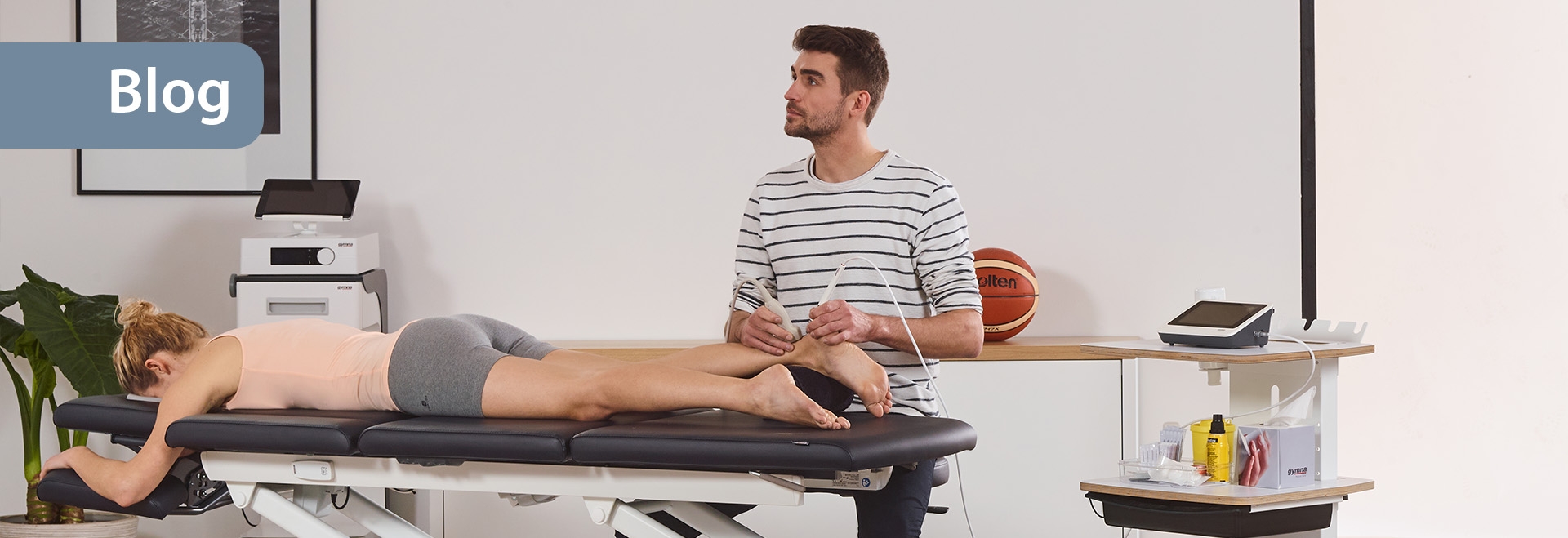
In Greek mythology, the hero Achilles had just one weak spot: his heel. Today, the tendon that bears his name can still be a real challenge for athletes and their physiotherapists. Standard care, meaning load reduction and targeted exercise therapy, isn’t always enough. So what if symptoms persist, or flare up again as soon as load increases? In that case, it may be worth broadening your treatment strategy. Percutaneous electrolysis is a physiotherapy treatment that can be used to complement an active treatment programme.
When tendon healing doesn’t go to plan
Because tendons are exposed to high tensile loads and have a relatively limited blood supply, they are slow to heal and need a careful balance between rest and activity. As a result, recovery from Achilles tendinopathy can take time. Some patients recover with correctly dosed exercise therapy, but not every patient progresses as expected. Sometimes load capacity plateaus, or returning to sport proves difficult. That’s a good moment to re-evaluate your treatment plan.
Percutaneous electrolysis as an adjunct treatment for Achilles tendon problems
When your patient’s recovery from Achilles tendinopathy stalls, it’s time to consider additional treatment options. One of these options is percutaneous electrolysis.
What is percutaneous electrolysis?
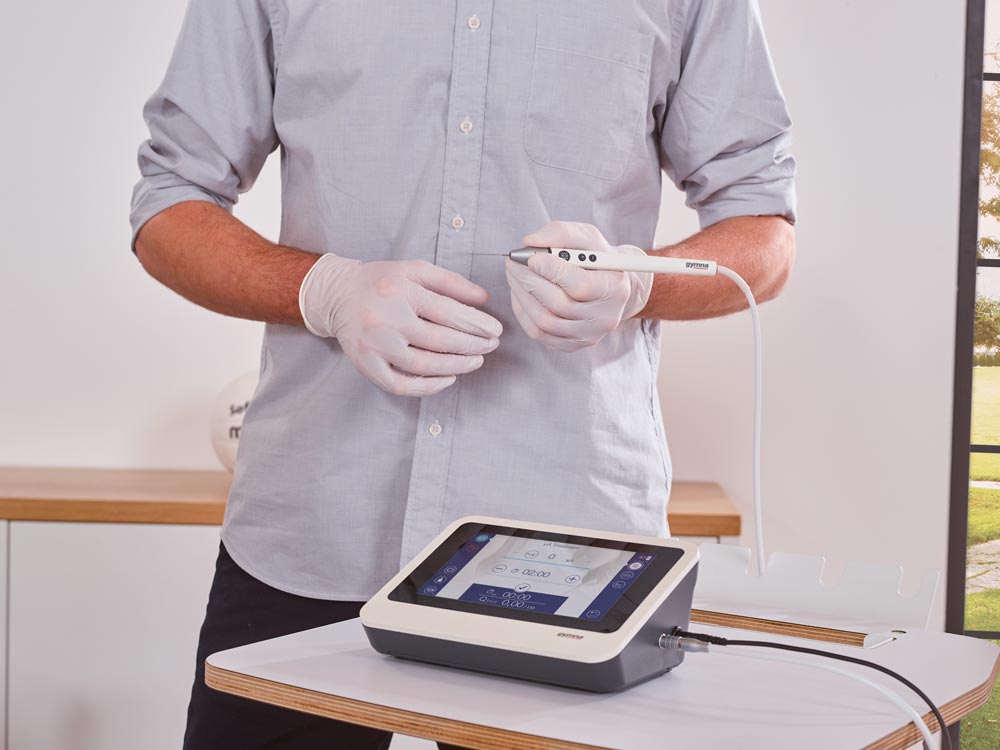
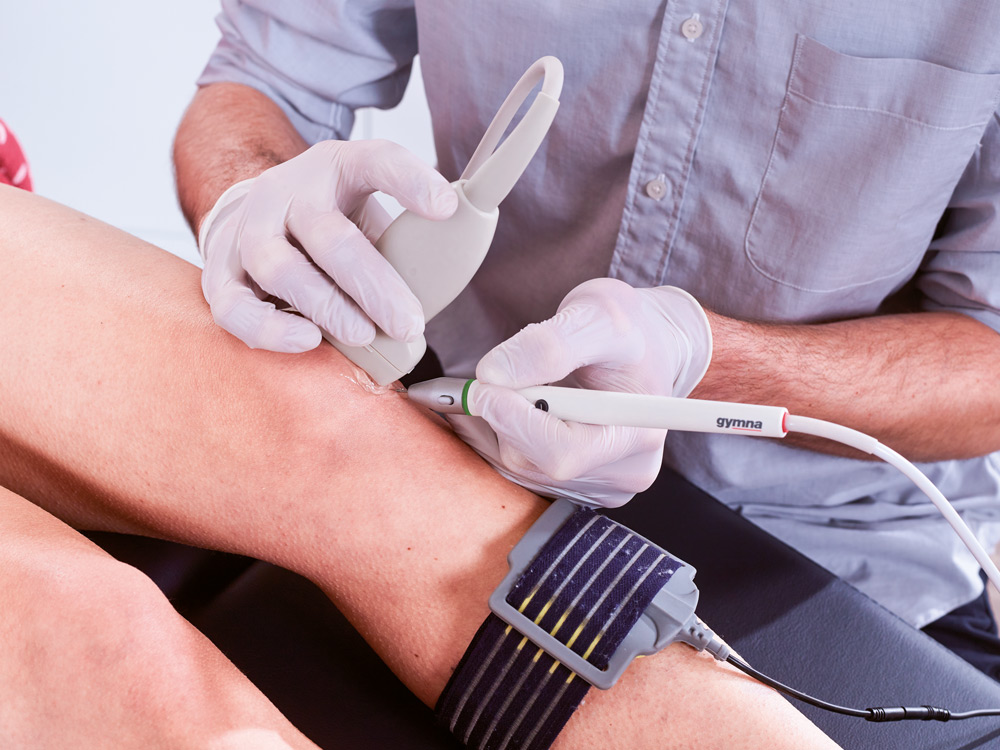
Percutaneous electrolysis is a minimally invasive treatment in which a dry needling needle is inserted into the affected tissue under ultrasound guidance and an electrical current is applied. There is evidence that this may have several effects on chronic tendinopathies:
- It triggers a controlled inflammatory response that initiates tissue remodelling
- It stimulates the collagen fibres to reorganise, improving the tensile strength of the tendon
- It stimulates angiogenesis
- It helps clear damaged cells
Ultrasound guidance is essential for precision and safety in this procedure. Ultrasound imaging lets you visualise the needle and the surrounding anatomical structures accurately throughout the treatment. In addition, percutaneous electrolysis generally causes only mild side effects, such as temporary post-treatment soreness (Schek et al., 2025).
Where percutaneous electrolysis fits alongside exercise therapy
Percutaneous electrolysis may be considered when a patient with Achilles tendinopathy fails to improve sufficiently despite an appropriate, well-structured exercise programme. The technique can be used as an adjunct treatment within the rehabilitation plan. Particularly in patients who respond insufficiently to a targeted exercise programme, electrolysis can help make the affected part of the tendon more receptive to the effects of exercise therapy.
In some cases, based on the clinical findings and the patient’s individual goals, a physiotherapist may choose to consider percutaneous electrolysis as an adjunct treatment earlier in the treatment pathway.
Percutaneous electrolysis is a minimally invasive technique in which a physiotherapist uses a needle to apply a galvanic current to the target tissue under ultrasound guidance. In Achilles tendinopathy, the technique can be considered as an adjunct to an active rehabilitation programme. Exercise therapy and gradual tendon loading remain the foundation. The specific evidence for electrolysis in Achilles tendon problems is promising, but still limited.
Experiences with percutaneous electrolysis
Physiotherapist and manual therapist Jur Snel has extensive experience using percutaneous electrolysis to treat tendon problems. He explains why ultrasound guidance matters and shares what he has learnt in practice: “Ultrasound guidance ensures safety and, at the same time, gives the patient helpful visual feedback. I’ve also achieved good results with it many times. In several cases, an injection or surgery was no longer needed once electrolysis had been added to the treatment.
 But I’ve also seen it the other way round: a patient who still had Achilles tendon problems after her operation, which we then brought under control with electrolysis and exercise therapy.”
His clinical experience raises an interesting question: what does the scientific literature say about using percutaneous electrolysis for Achilles tendinopathy?
What does the research say about percutaneous electrolysis?
Tendinopathy is the most common overuse condition in sports medicine. The scientific evidence for percutaneous electrolysis in tendinopathies, particularly of the patellar and Achilles tendons, is promising but unfortunately still limited.
Schek et al. (2025)1 examined the available clinical evidence for this treatment in a clinical review. They concluded that percutaneous electrolysis (combined with exercise therapy) led to reduced pain and improved function, including in the long term.
In a randomised controlled trial (RCT), Delgado Álvarez et al. (2026)2 compared percutaneous electrolysis with dry needling of trigger points in the gastrocnemius muscle in patients with Achilles tendinopathy. The group treated with percutaneous electrolysis showed greater improvements in pain and mechanosensitivity. Better results were also found for ankle dorsiflexion and quality of life.
From clinical decision to everyday practice
Electrolysis can therefore be very valuable when other interventions don’t work, or don’t work well enough. It gives you an extra tool for getting to grips with tendinopathies that are hard to treat. But to apply percutaneous electrolysis safely and accurately, the right equipment matters as well as thorough training. A device needs to be reliable and easy to use in everyday practice. So if you’re looking for a suitable device, ease of use, a wide range of settings and convenience should all be on your wish list.
The benefits of a reliable device for percutaneous electrolysis
Physiotherapist and manual therapist Jur Snel cites the Gymna Acure 250 as an example of such a reliable, user-friendly device. The Gymna Acure 250 has been developed for the professional use of percutaneous electrolysis and combines targeted treatment with user-friendly operation. Snel is particularly pleased with its ergonomic controls: “The ergonomic smart handpiece of the Acure 250, with start/stop and intensity buttons, makes the device incredibly easy to use. Because the buttons are within reach, you stay in full control of your treatment. After all, your hands are already full with the ultrasound probe and the Acure 250 pen.” According to Snel, the needle grip mechanism also plays an important part in making the Acure 250 easy to use: “I’m also pleased with the safe needle grip mechanism. If you prefer, you can place the needle manually first and then simply connect the Acure 250 to it.”
The Acure 250 also offers several features that support the use of percutaneous electrolysis in everyday practice:
- Intuitive touchscreen operation, with an anatomical library, the option to work by body region and the ability to save your own protocols
- An LED ring for instant visual feedback on the treatment status
- A constant, galvanic current of up to 2,500 µA
- Adjustable ramp-up and ramp-down of the current intensity
The right technique starts with the right clinical decision
All in all, percutaneous electrolysis is a safe adjunct treatment for persistent Achilles tendon problems. The Gymna Acure 250 is a valuable, user-friendly partner in this, thanks in part to its ergonomic smart handpiece and intuitive touchscreen operation.
Would you like to know more about percutaneous electrolysis, or about the Gymna Acure 250 in particular? Feel free to contact your Gymna partner, with no obligation.
FAQ
What is percutaneous electrolysis?
Percutaneous electrolysis is a minimally invasive treatment in which a dry needling needle is inserted into the affected tissue under ultrasound guidance and an electrical current is applied. The aim is to trigger a controlled inflammatory response, stimulate angiogenesis and the reorganisation of collagen fibres, and clear damaged cells.
-
When should you choose percutaneous electrolysis?
Percutaneous electrolysis may be considered when a patient with chronic tendinopathy fails to improve sufficiently despite an appropriate, well-structured exercise programme.
-
Which conditions can percutaneous electrolysis be used for?
Percutaneous electrolysis can be used for persistent tendon problems such as tennis elbow, jumper’s knee, Achilles tendon problems and rotator cuff tendinopathy, as well as for myofascial trigger points and plantar heel pain.
-
Can percutaneous electrolysis be used as a stand-alone treatment?
The technique is used as an adjunct treatment within the rehabilitation plan. Particularly in patients who respond insufficiently to a targeted exercise programme, electrolysis can help make the affected part of the tendon more receptive to the effects of exercise therapy.
-
How long does a percutaneous electrolysis treatment take?
Applying the current usually takes a few minutes per treatment site, depending on the protocol. The full session takes longer because of the assessment, ultrasound localisation and preparation.
-
What are the side effects of percutaneous electrolysis?
Percutaneous electrolysis generally causes only mild side effects, such as temporary post-treatment soreness.
-
How many sessions of percutaneous electrolysis does it take to see results?
Some patients notice an improvement after just a few sessions, but the number of treatments needed varies by condition, treatment protocol and individual. For the average indication, 3 to 6 treatments are needed. If the condition hasn’t improved by then, further sessions are unlikely to help.
[1] Schek, A., Schlesiger, L., Knapp, J., Welsch, G., & Abat, F. (2025). The ultrasound-guided electrolysis therapy (USGET) in sports medicine: Clinical evidence and molecular insights. German Journal of Sports Medicine, 76(7), 239–244. https://doi.org/10.5960/dzsm.2025.646
[2] Delgado Álvarez, S., Méndez Sánchez, R., Polo Ferrero, L., Rodríguez Fragua, I., Loaiciga Espeleta, C., González Raja, R., Sánchez Milá, Z., & Velázquez Saornil, J. (2026). Effectiveness of Dry Needling Versus Percutaneous Electrolysis in Achilles Tendinopathy: A Randomized Clinical Trial. Cureus, 18(2), e104384. https://doi.org/10.7759/cureus.104384
Share this article


 +32 89 510 532
 info@gymna.com


