




 Belgium -
English
Belgium -
English

Five promising treatment methods for long COVID
The importance of physiotherapy for long COVID
Although COVID has faded from the headlines, its long-term effects are still very real. Every day, physiotherapists treat patients struggling with long COVID in their practices. So how can you support them effectively, and which tools can help make that process easier? Keep reading to find out.
What is long-covid and when does a physiotherapist come into the picture?
Patients with long COVID, also called post-COVID syndrome, experience persistent symptoms following a COVID-19 infection. Long COVID is a multisystem condition that can affect various parts of the body, resulting in a wide range of symptoms. While the exact symptoms differ from patient to patient, severe fatigue is one of the most common and debilitating symptoms following a COVID-19 infection.
Indications for physiotherapy in long COVID
According to the Dutch professional association's position on physiotherapy for COVID-19, the following symptoms often indicate a need for physiotherapy:
- Reduced muscle function and/or mass, balance or endurance
- Reduced physical (exercise) capacity and/or overall physical activity
- Limitations in performing daily activities due to prolonged immobilisation, such as severe muscle weakness and fatigue
- Breathing-related complaints, such as dyspnoea, and difficulty coping with these issues in daily life
- Stress and/or sleep problems and challenges in managing them
- Imbalance between workload and capacity, leading to reduced self-reliance.
These complaints are frequently the reason patients are referred to physiotherapy. But what does that look like in practice – and how are these treatments actually approached?
The role of the physiotherapist in the rehabilitation of long COVID
Physiotherapists play a key role in educating, advising and guiding long COVID patients through exercise therapy tailored to the treatment goals set by each patient. Because physical capacity and recovery progress vary from patient to patient, every treatment plan is tailor-made.
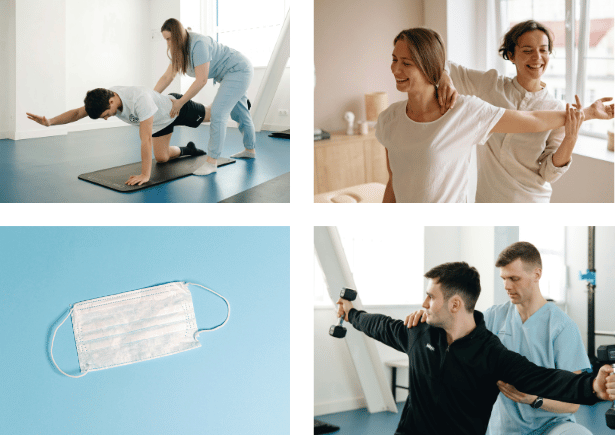
In addition, physiotherapists act as an important early warning system, identifying potential complications or comorbidities that may require referral (back) to a general practitioner or other healthcare professionals.
Finally, through close and frequent interaction with the patient, physiotherapists play a pivotal role in the overall recovery process of long COVID patients.[i]
The Dutch professional association provides a detailed explanation of these responsabilities below.
The physiotherapist plays a pivotal role in the recovery process of the long COVID patient.
Information and energy management: the basis of recovery
As with any treatment, the treatment process for patients with long COVID begins with providing patients with clear information about the disease process and the planned physiotherapy treatment approach. In addition, physiotherapists teach patients how to manage their energy to help stabilise their symptoms - often through pacing. This means breaking activities into shorter sessions and incorporating rest periods to avoid overexertion.
Exercise therapy: responsibly building physical capacity
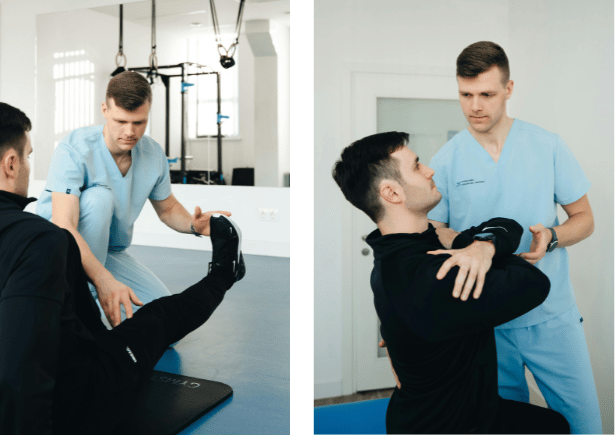
Exercise therapy supports patients in gradually building up their physical capacity. This typically involves practising ADL activities (activities of daily living), improving muscle function and increasing endurance. It’s important to carefully monitor the balance between exertion and capacity, as overexertion can worsen symptoms – sometimes for an extended period of time. Overloading can be most effectively tracked using the patient’s resting heart rate and tools such as the Borg scale for fatigue and shortness of breath.
Additional physiotherapeutic interventions for long COVID
When indicated, breathing and relaxation therapy are also important components of a treatment. This can include regular breathing exercises and, in some cases, respiratory muscle strength training. Relaxation therapy may help patients who experience shortness of breath, sleep difficulties, stress or hypertonic muscles. Finally, some lung COVID patients may benefit from electrostimulation. Although this technique is still relatively rarely used in this patient group, studies have shown promising results.
Scientific evidence: what do we know so far?
Although long COVID is a relatively new condition, clinical studies are already emerging. For example, a recent systematic review by De Andrade et al. (2025)[ii] examined seven studies investigating strength training in long COVID patients. The review concluded that exercise therapy can offer potential benefits for patients with long COVID in terms of fatigue, physical condition, mood and overall quality of life.
Neuromuscular electrostimulation as an innovative addition to treatment
Research has also explored the use of neuromuscular electrostimulation (NMES) in COVID patients. NMES can help prevent muscle atrophy, improve muscle strength and function, maintain blood circulation and reduce oedema in bedridden patients. This is particularly encouraging because it means that NMES can play a valuable role in both the care and aftercare of patients who have ended up in intensive care due to a COVID-19 infection.[iii]
Did you know that electrostimulation has proven positive effects as a supplement to regular physiotherapy in long COVID patients?
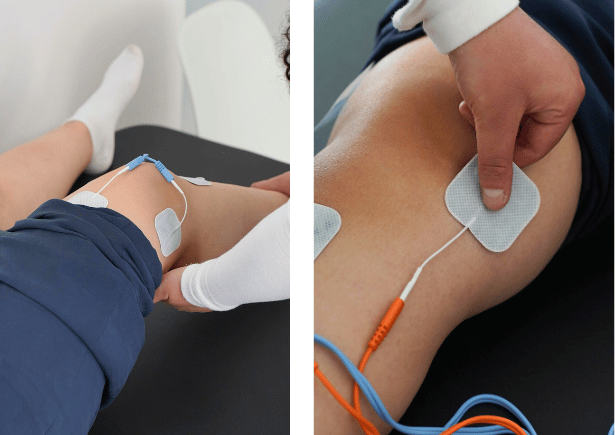
A systematic review by Carvajal-Tello (2024)[iv] found that NMES, when used alongside regular physiotherapy, can positively impact muscle mass, muscle strength and function in patients with persistent symptoms after a COVID-19 infection. Treatment sessions typically lasted between 30 and 60 minutes, targeting muscles such as the quadriceps, tibialis anterior, gluteus and hamstrings.
This makes electrostimulation, in addition to exercise therapy, a promising and innovative treatment method for long COVID. The modular Elexeo platform –which can include electrotherapy, ultrasound and/or vacuum therapy- further simplifies this treatment. Its compact design and battery module allow physiotherapists to use it wherever they need, making it ideal for mobile care.
Neuromuscular electrostimulation with Gymna Elexeo
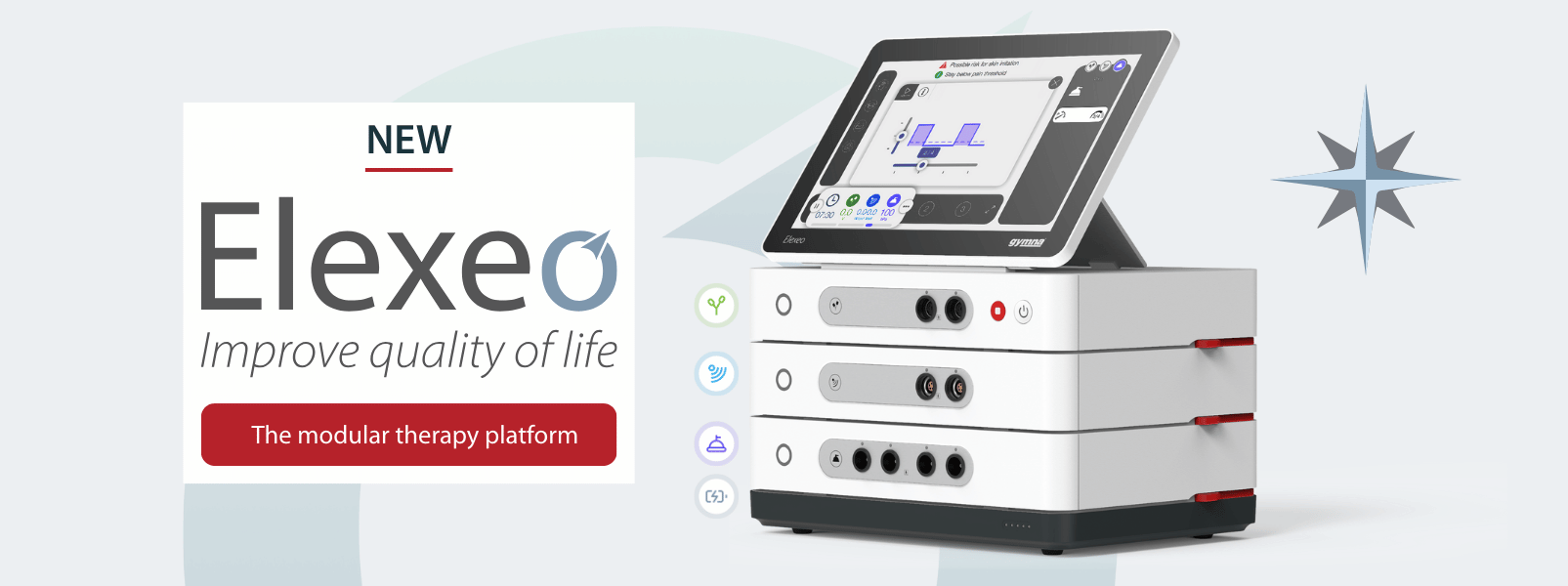
Elexeo is a modular physical therapy system consisting of a control unit that supports electrotherapy or ultrasound therapyn with the option to add additional modules as needed. Thanks to the simple plug-and-play principle, you can expand your device at any time with separate ultrasound, electrotherapy or vacuum therapy or the battery module. All required software is already pre-installed on the control unit and the single user interface ensures the entire system remains easy and intuitive to use.
Multiple paths to recovery
Long COVID remains a complex condition that can differ significantly from one patient to another. That is precisely why the role of the physiotherapist is so important. By carefully building-up exercise capacity, addressing breathing and relaxation, and making smart use of tools such as NMES, you can effectively guide patients on their path towards recovery.
Would you also like to enhance your treatments with electrotherapy as well? With Elexeo, incorporating this technique becomes easier and more flexible.
Discover how Elexeo can strengthen your practice
[i] https://www.kngf.nl/app/uploads/2024/07/kngf-standpunt_fysiotherapie_bij_covid-19_29032022.pdf
[ii] de Andrade, M. L., do Monte, A. L., Gerage, A. M., Galliano, L. M., Costa, E. C., Ritti Dias, R. M., & Corrêa, F. I. (2025). Effects of Physical Exercise on Functional Physical Performance in Individuals With Long COVID: A Systematic Review. Journal of cardiopulmonary rehabilitation and prevention, 45(4), 239–246. https://doi.org/10.1097/HCR.0000000000000950
[iii] Burgess, L. C., Venugopalan, L., Badger, J., Street, T., Alon, G., Jarvis, J. C., Wainwright, T. W., Everington, T., Taylor, P., & Swain, I. D. (2021). Effect of neuromuscular electrical stimulation on the recovery of people with COVID-19 admitted to the intensive care unit: A narrative review. Journal of rehabilitation medicine, 53(3), jrm00164. https://doi.org/10.2340/16501977-2805
[iv] Carvajal-Tello, N., Segura-Ordóñez, A., García-Muñoz, H., Sánchez-Montoya, L. J., Cambindo-Larrahondo, L. M., Muñoz-Chaux, V., Barahona-Guzmán, J. P., & Caballero-Lozada, A. F. (2025). Systematic review of the effects of neuromuscular electrical stimulation in post-coronavirus disease. The South African journal of physiotherapy, 81(1), 2132. https://doi.org/10.4102/sajp.v81i1.2132
Share this article


 +32 89 510 532
 info@gymna.com


