




 Belgium -
English
Belgium -
English

Shockwave therapy for plantar fasciitis
From protocol to patient-centred treatment
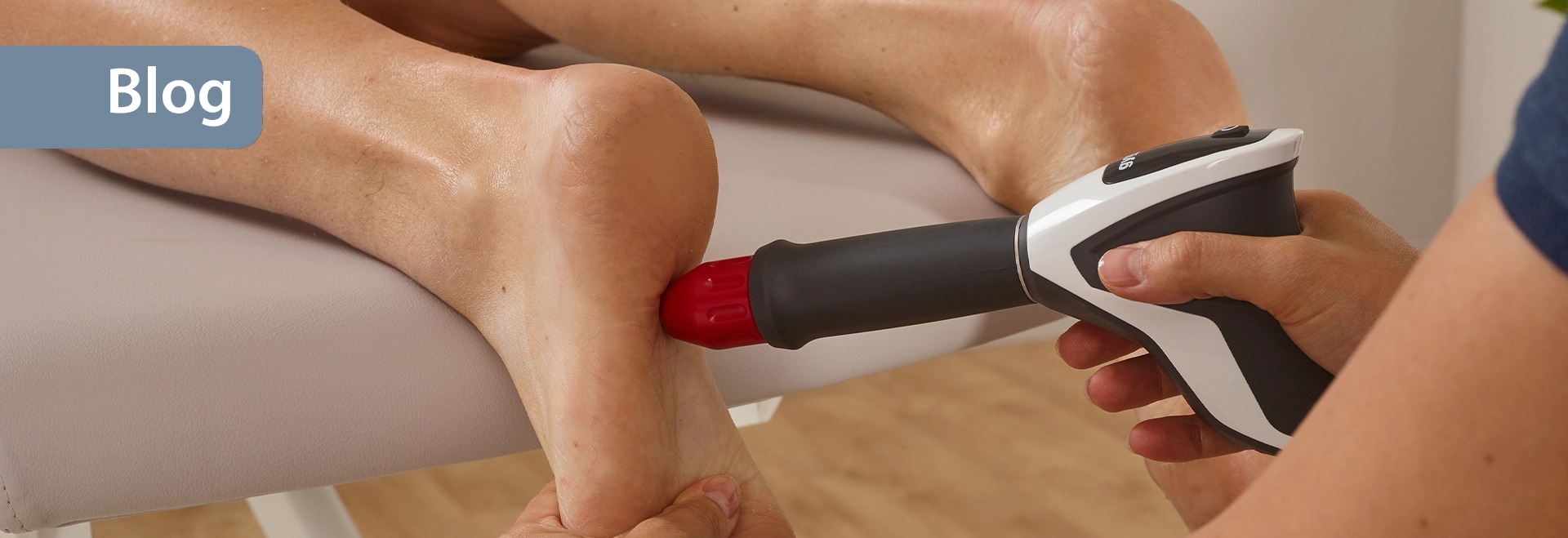
You regularly come across them in your practice: patients suffering from heel spurs. The symptoms are often recognisable, but a speedy recovery is by no means guaranteed. It is rarely just about a painful heel. It is a combination of strain, tissue capacity and time. So what is the best way to treat heel spurs, and when should you opt for an additional intervention such as shockwave therapy? You can read about it below.
When should you consider shockwave therapy? After at least 12 weeks of treatment involving patient education and exercise therapy, but with no signs of recovery.
Plantar fasciitis: a well-known, debilitating and persistent condition
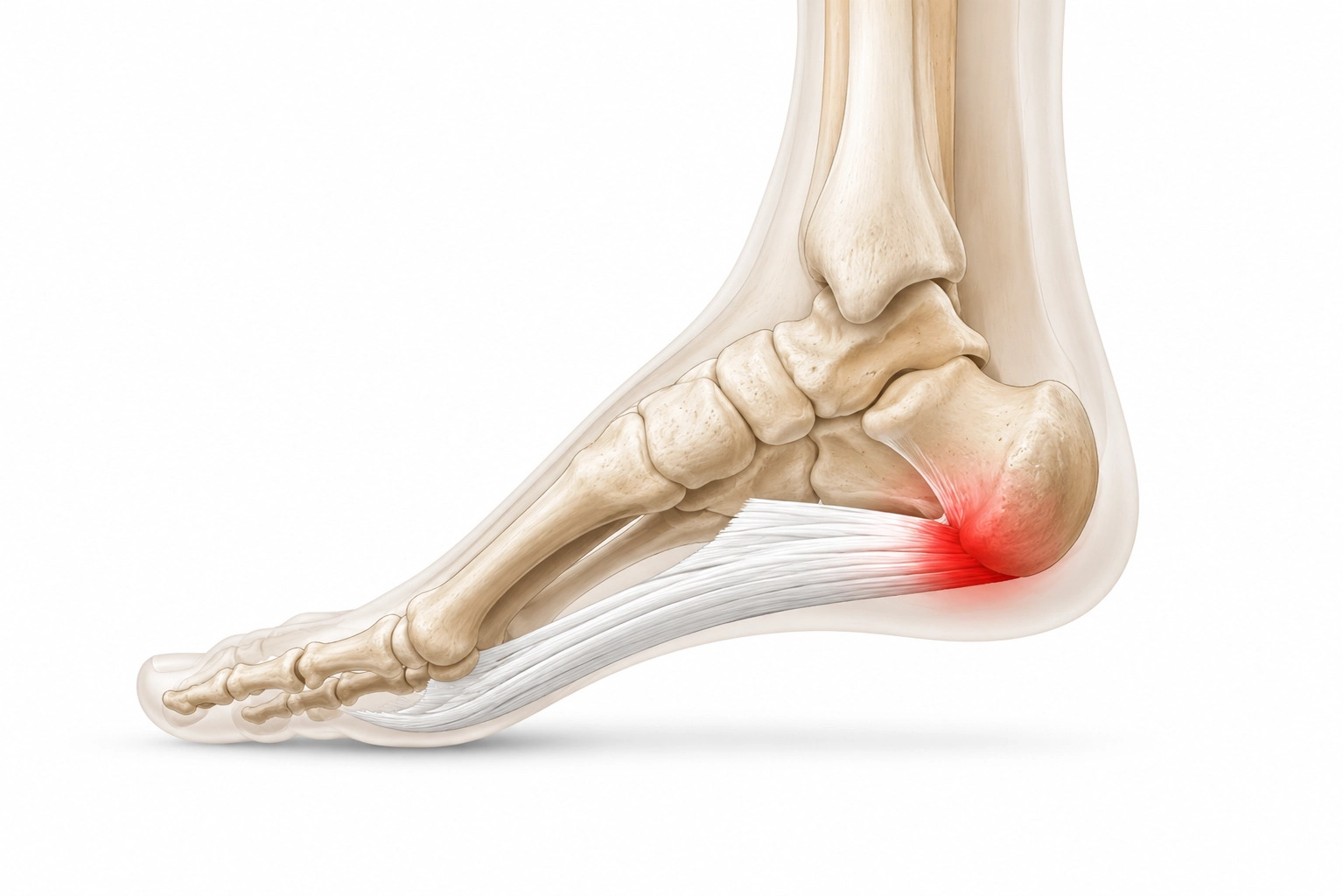
Plantar fasciitis, plantar fasciopathy or heel spur: three names for the same well-known problem of plantar heel pain that affects daily functioning, sport and sometimes even work. This debilitating condition arises from overuse during sport, or in daily life due to being overweight1, prolonged standing, or the alignment of the feet/ankles or calf muscle tone.
As plantar fasciopathy is a condition affecting the plantar fascia beneath the foot, the progression of symptoms often follows Blazina’s classification of tendon disorders2 .The longer the condition persists, the more diffuse the area of pain may become.
Prognosis for plantar fasciitis
Patients often expect a rapid recovery, but unfortunately, experience suggests otherwise. In standard cases, recovery from a heel spur takes several months. Furthermore, a 2018 study by Hansen et al.3 even shows that 46 per cent of patients with heel spurs still experience pain after 10 years.
“Almost 50 per cent of patients with heel spurs still experience pain after 10 years.”
Pitfalls in the treatment of heel spurs
Precisely because plantar fasciitis is so well known, there is a risk that the condition is treated too routinely. The trick, therefore, lies in striking the right balance between symptom relief, patient education and gradual increase in activity levels.
Physiotherapy treatment options for heel spurs
As a physiotherapist, you have several treatment options at your disposal, such as patient education, footwear advice, exercise therapy, and complementary interventions such as taping, dry needling and shockwave therapy.
Education
The treatment of plantar fasciitis begins, first and foremost, with providing your patient with thorough information. For example, it is important to ask your patient to replace the triggering activity with a non-triggering one. An NPRS score of up to 3 during activity is acceptable. From there, the patient may then begin a gradual build-up .4
Footwear advice
Generally speaking, a comfortable, supportive shoe with a low heel is recommended. However, a study by Reinstein from 20245 actually advises walking barefoot, as this can strengthen the intrinsic foot muscles and thus support the plantar fascia. But if your patient is not used to this, it may well cause other injuries. Tailored advice is therefore important.
Exercise therapy
The advice is to first have your patient perform stretching exercises (daily) and progressive strength-building exercises (every other day) for at least 12 weeks, during which your patient may experience some pain. Although an improvement in function and a reduction in pain are quite possible after those 12 weeks, the majority of patients are still not symptom-free at that point.4
Taping and dry needling
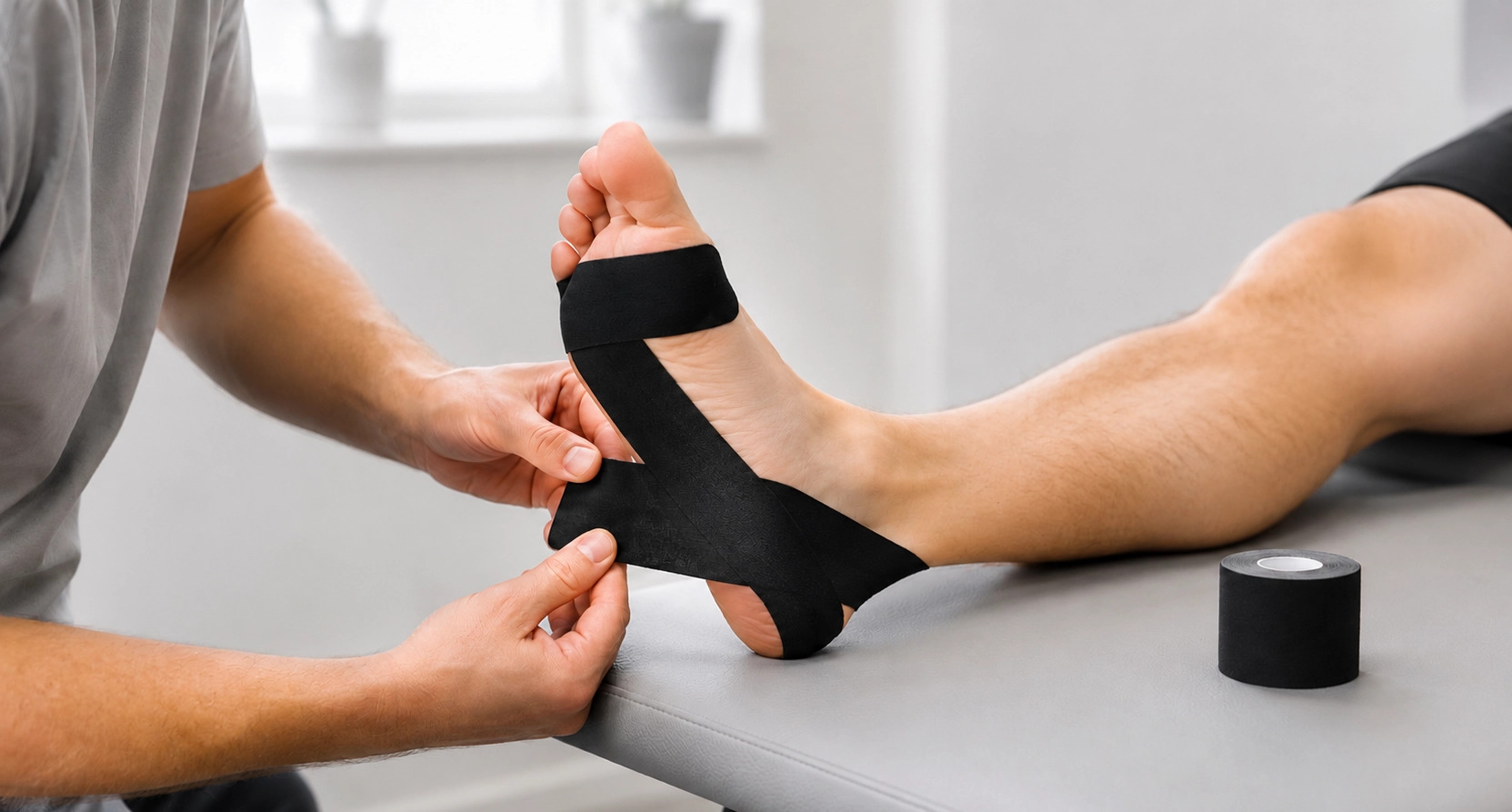
Kinesio taping can indirectly contribute to recovery by relaxing the tendon plate through the use of a supportive tape applied directly to the tendon plate itself or a de-tensioning tape applied to the calf muscles. Dry needling, too, can only contribute indirectly to recovery, for example by relaxing hypertonic calf muscles and thereby reducing the tension on the tendon plate.
When should you consider shockwave therapy?
Persistent symptoms despite at least 12 weeks of education and exercise therapy? In that case, shockwave therapy can be a useful addition. The Dutch Federation of Medical Specialists4 recommends, based on international literature reviews, a maximum of 3 sessions, each with a one-week interval. Combining this with exercise therapy remains important.
It is important to tailor shockwave therapy to the patient sitting in front of you. After all, every patient and every situation is different. The question is therefore not just whether to use shockwave therapy, but also how to dose it and monitor progress.
“The question is therefore not just whether to use shockwave therapy, but also how to dose it and monitor it.”
Patient-centred shockwave therapy for plantar fasciitis
The effectiveness of shockwave therapy depends primarily on how the treatment is tailored to the individual patient.
Key considerations when determining your basic parameters:
- Which applicator is suitable for the tissue area and depth?
- How long have the symptoms been present?
- How well was the previous session tolerated?
- Do you increase the intensity, keep it the same or adjust it?
- How sensitive is the patient today?
Finally, it is also important to consider which shockwave system can best support you, without compromising the consistency of the treatment.
Tailoring treatment parameters to the patient
Many shockwave systems focus on power, handpieces and technical control. That is important, but for you as a physiotherapist, the following question is just as relevant: how does the system help me make the right treatment choice for this patient, at this particular moment?
Particularly when the patient’s symptoms change or they respond differently to what you had expected, that treatment choice can be difficult. This is precisely where technology can offer valuable support. With the Patient Guided Therapy System (pGTS), the Gymna ShockMaster helps you to ensure consistency in your treatment plan, without taking over your critical judgement.
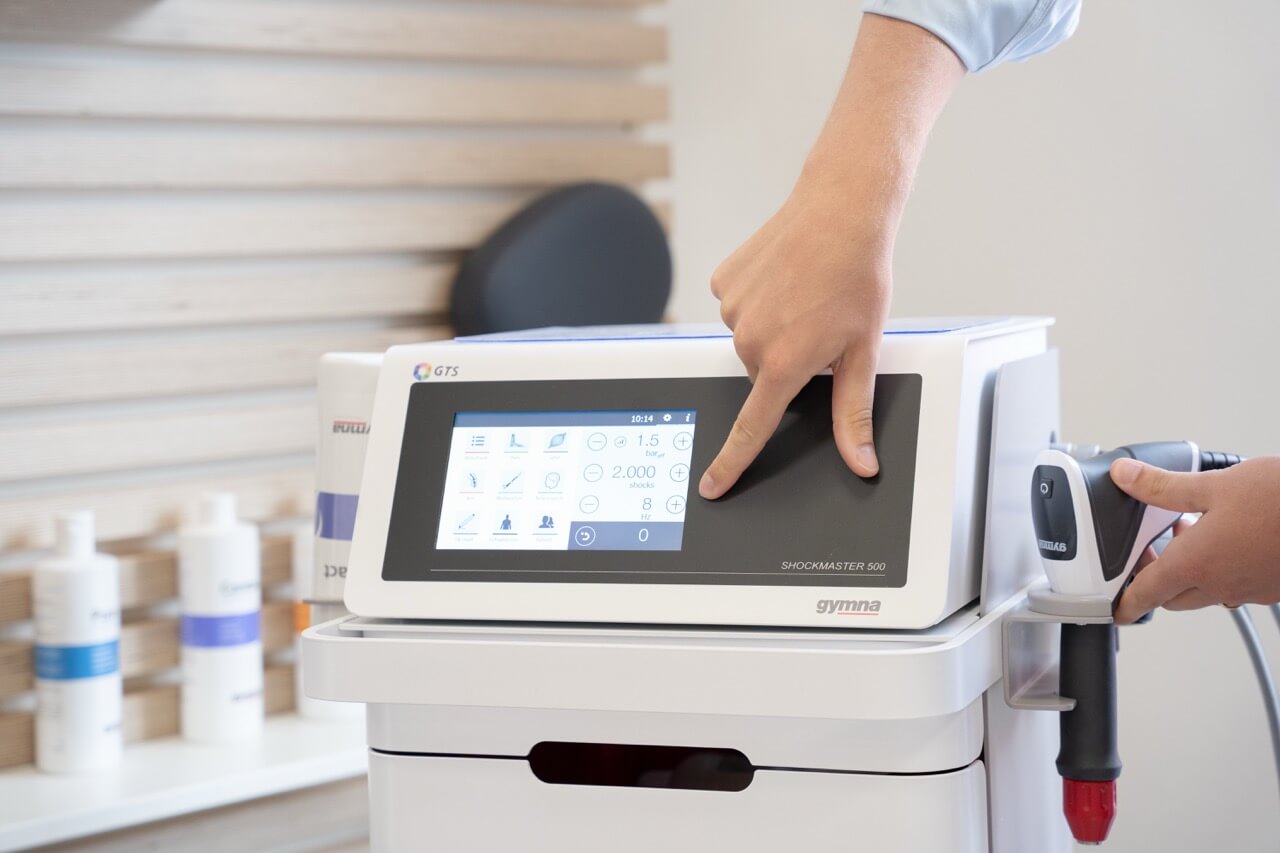
How pGTS supports the physiotherapist
With plantar fasciopathy, there is no single treatment setting that works the same for every patient and every session. Pain sensitivity, tolerance levels and the response to a previous treatment can vary significantly. The challenge is therefore to select an appropriate starting level and to build up the treatment carefully.
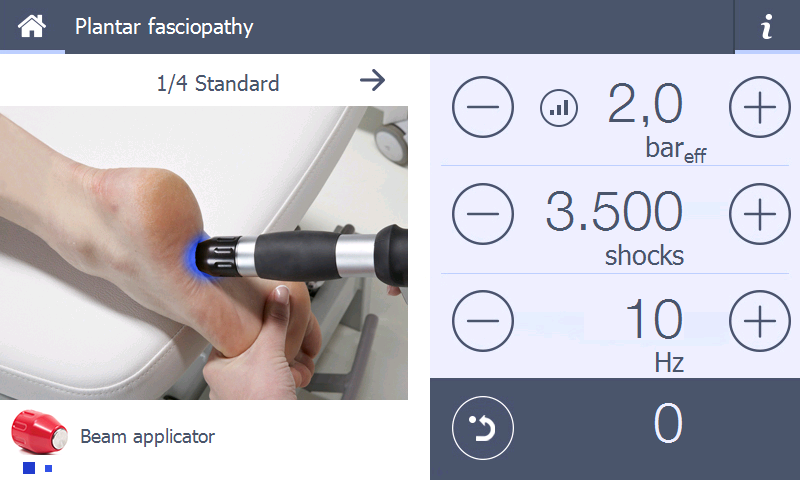
The Patient Guided Therapy System (pGTS), integrated into the Gymna ShockMaster-software provides practical support in this regard. Based on the selected indication and the assessment of the patient, the system guides the physiotherapist towards a suitable treatment protocol. It provides guidance on the choice of applicator, the treatment area and the associated parameters. Images and additional information support thevarious stages of the treatment.
The suggested settings always serve as a starting point. The physiotherapist can adjust the intensity and other parameters before or during treatment to suit what the patient can tolerate at that moment. In the case of dynamic protocols, data from previous sessions makes it easier to track the progression of the treatment.
pGTS therefore does not take over the clinical decision-making. The physiotherapist determines which approach is suitable for the patient and retains the freedom to deviate from the proposal. The system primarily helps to apply choices in a structured and consistent manner. In this way, shockwave therapy remains part of a personalised treatment plan in which the physiotherapist’s expertise is central.
Greater confidence in every shockwave treatment
The treatment of plantar fasciitis therefore clearly requires more than a standard protocol. Not only in your choice of treatment modality, but also within the treatment modality itself. In the case of shockwave therapy, pGTS in the Gymna ShockMaster can help you with this personalisation. In this way, your complementary treatment becomes not an automatic procedure, but a guided treatment process.
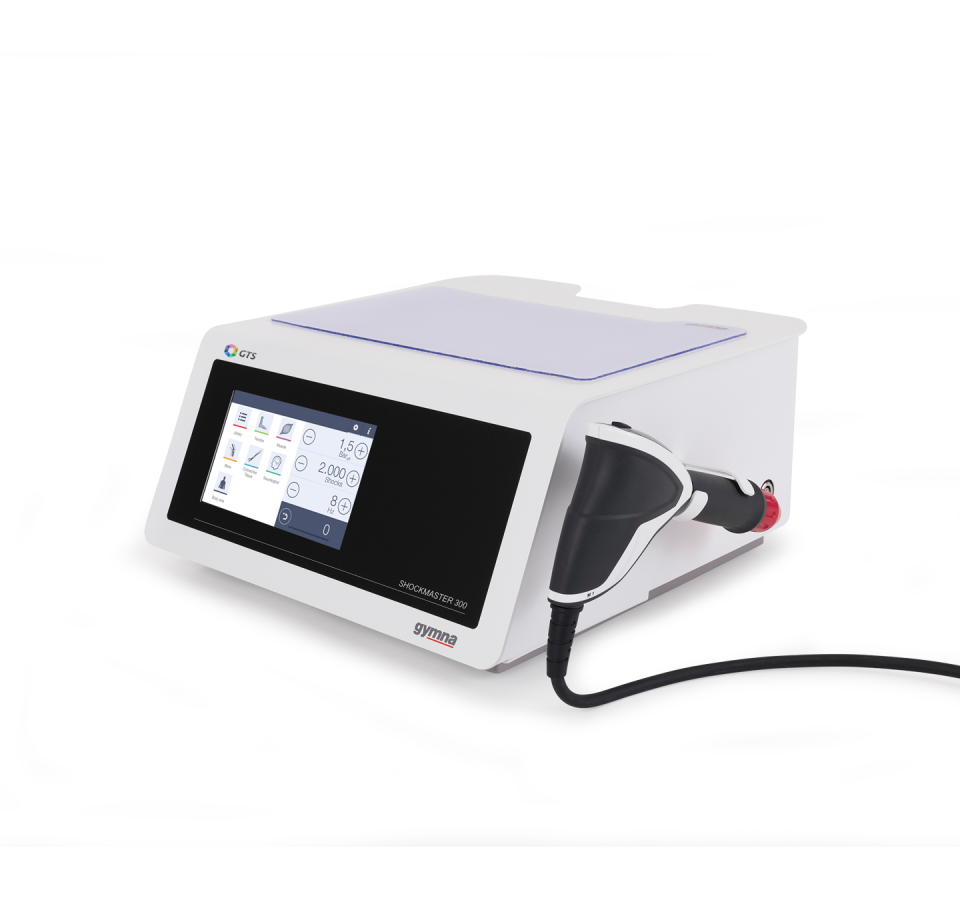 Curious to find out how your shockwave therapy treatments can be tailored more consistently to your individual patient?
Discover how Gymna ShockMaster with pGTS supports you in delivering patient-centred shockwave therapy.
Discover the Gymna ShockMaster
FAQs
When should you start shockwave therapy for plantar fasciitis?
If you have treated your patient for at least 12 weeks with patient education and exercise therapy, but recovery has not yet occurred, you may choose to supplement your treatment with shockwave therapy.
Is shockwave therapy more effective than exercise therapy for plantar fasciitis?
No, shockwave therapy is not necessarily more effective than exercise therapy for plantar fasciitis. With plantar fasciitis, the best results come from the right combination of treatment modalities. Exercise therapy plays a major role in this. Shockwave therapy can be a useful addition to the treatment if the patient still experiences symptoms after 12 weeks of treatment with education and exercise therapy. Shockwave therapy can therefore certainly offer added value, provided it is applied at the right time.
How many shockwave treatment sessions are needed for plantar fasciitis?
The Dutch Federation of Medical Specialists recommends a maximum of 3 sessions, with a one-week interval between each. Combining this with exercise therapy remains important.
Can shockwave therapy be combined with exercise therapy for plantar fasciitis?
Yes. In fact, it is actually recommended to combine shockwave therapy with exercise therapy to achieve the best results.
1 Hamstra-Wright, K. L., Huxel Bliven, K. C., Bay, R. C., & Aydemir, B. (2021). Risk Factors for Plantar Fasciitis in Physically Active Individuals: A Systematic Review and Meta-analysis. Sports Health, 13(3), 296–303. https://doi.org/10.1177/1941738120970976
2 Blazina, M. E., Kerlan, R. K., Jobe, F. W., Carter, V. S., & Carlson, G. J. (1973). Jumper’s knee. The Orthopaedic Clinics of North America, 4(3), 665–678.
3 Hansen, L., Krogh, T. P., Ellingsen, T., Bolvig, L., & Fredberg, U. (2018). Long-term prognosis of plantar fasciitis: A 5- to 15-year follow-up study of 174 patients with ultrasound examination. Orthopaedic Journal of Sports Medicine, 6(3), 2325967118757983. https://doi.org/10.1177/2325967118757983
4 Association for Sports Medicine. (2026). Plantar fasciopathy. Guidelines database.https://richtlijnendatabase.nl/richtlijn/fasciopathie_plantaris/startpagina_fasciopathie_plantaris.html 5 Reinstein, M., Weisman, A., & Masharawi, Y. (2024). Barefoot walking is beneficial for individuals with
persistent plantar heel pain: A single-blind randomised controlled trial. Annals of Physical and Rehabilitation Medicine, 67(2), 101786. https://doi.org/10.1016/j.rehab.2023.101786
Share this article


 +32 89 510 532
 info@gymna.com


