




 Belgium -
English
Belgium -
English

Treatment methods and tools used by sports physiotherapists
Treatment methods and mobile treatment solutions
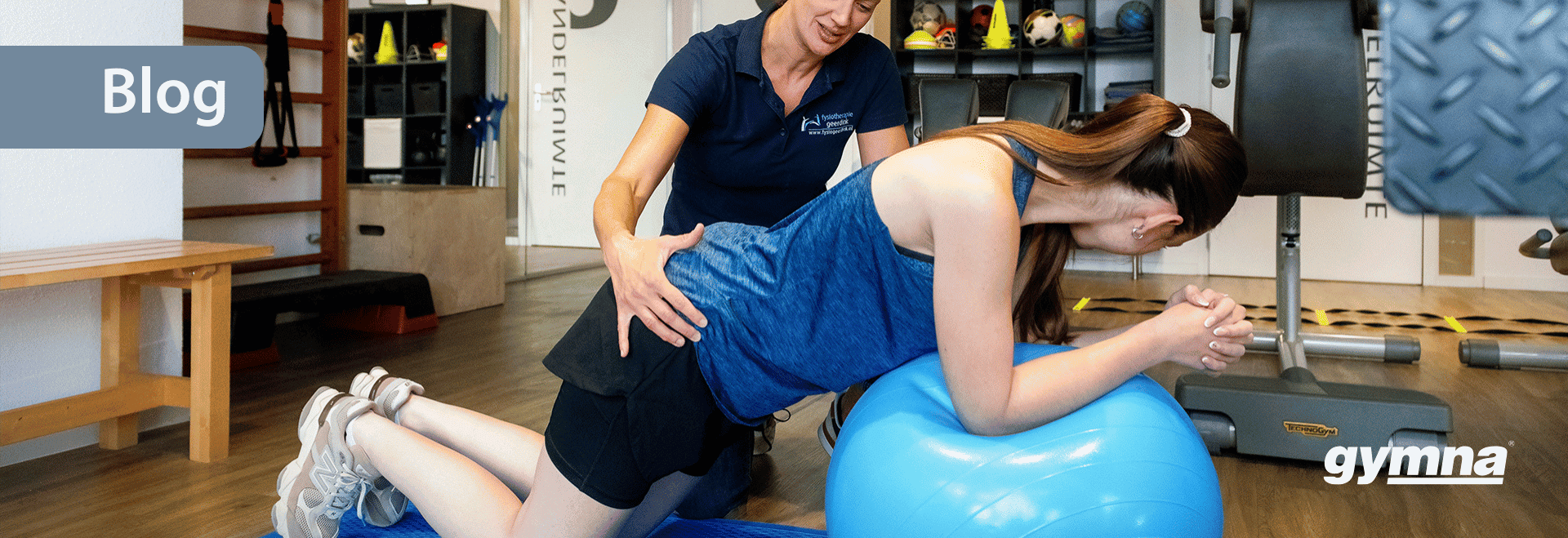
"Ouch! My hamstring! What should I do now?" Whether you are a professional athlete or an enthusiastic amateur, few things are more frustrating than a sports injury. Injured athletes usually turn to a sports physiotherapist quickly -but how does a sports physiotherapist guide them towards a quick and effective recovery? And which treatment solutions make the biggest difference? Read on to find out.
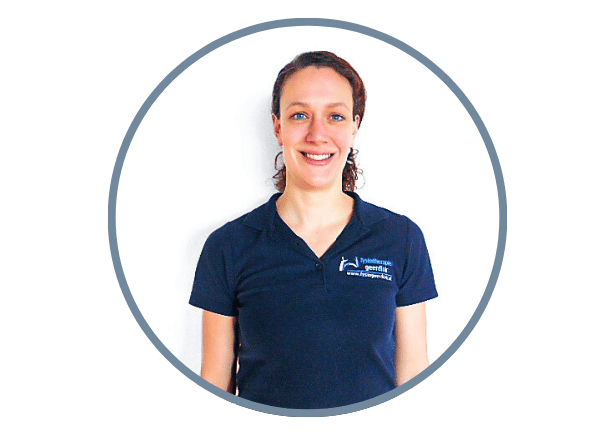
Chris Schmeetz is a registered master sports physiotherapist and a member of the Regional Shoulder Network, an organisation that brings together specialist physiotherapists to enhance the care of shoulder complaints.
What does a sports physiotherapist do?
When we think of a sports physiotherapist, we often imagine someone running onto the field during a match to assist an athlete with an acute injury. According to Chris Schmeetz, who holds a master's degree in sports physiotherapy this is a common misconception:
"The carers or physiotherapists you typically see rushing onto the field focus on immediate care -they work curatively and assess on the spot what can be done to keep the athlete in the game a little bit longer. But in most cases, the damage has already been done. A master's level sports physiotherapist, on the other hand, focusses mainly on prevention."
The professional life of sports physiotherapist Chris Schmeetz
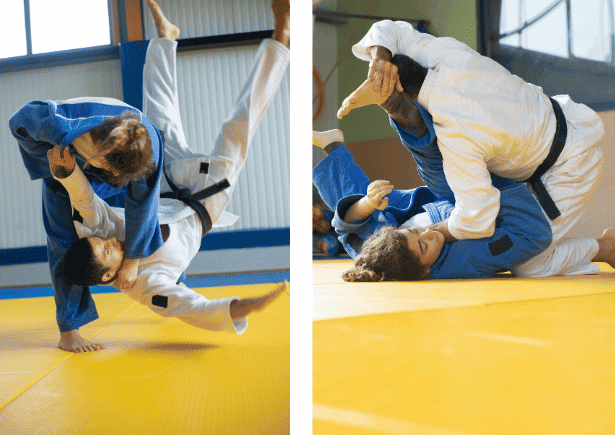
Chris treats a wide range of sports-related complaints in her practice and maintains affiliations with various sports clubs. In the past, she has worked with football, gymnastics and volleyball clubs, and she is currently affiliated with a handball and judo club. She primarily treats athletes from these clubs for traumatic injuries or strain complaints. Additionally, she regularly attends training sessions in the sports hall to investigate whether the complaints she frequently encounters are linked to technique, training methods or equipment.
"Take the judo club, for example. They had been training on worn-out mats for a long time, which led to a high number of fall-related injuries. Since new mats were installed, the number of such injuries has dropped significantly. I also make a point of observing the trainers' approach. In many sports, junior athletes are often trained by less experienced athletes who haven’t fully mastered the techniques themselves. As a result, mistakes quickly creep into techniques and training structure, both per training session and across the entire season."
Sports physiotherapists often analyse a patient's problem differently than other specialists.
"We always look at the entire chain. What isn’t functioning properly, and how does that relate to the patient’s main pain complaint? For example, I sometimes find issues in the shoulder girdle in patients with neck problems, even when they report no discomfort in the shoulder. Yet, by addressing the shoulder problem, the neck complaints often disappear."
Finally, prevention is also a key focus in her profession, with regular testing and measurements playing a very important role. Chris:
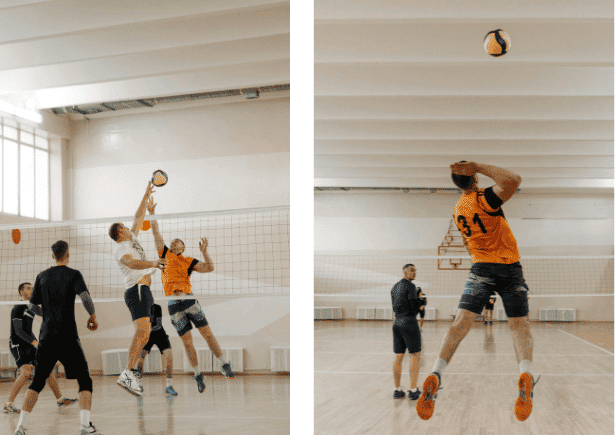
"Take volleyball players, for example. I measure their jumping power. If they cannot jump high enough, more strain is placed on their back and shoulders, which increases the risk of injuries."
What does treatment by a sports physiotherapist look like?
Chris always treats the athletes she sees according to the Rehaboom principle. She begins by working on coordination and flexibility to establish the right foundation. Only when that’s accomplished, does she move on to endurance, strength and speed - testing coordination and flexibility at every stage. Her approach combines hands-on techniques in the treatment room with targeted exercise therapy.
The sports physiotherapist in the treatment room: treatment methods
The foundation of a treatment usually takes place in the treatment room. This can include joint mobilisation, as well as techniques like dry needling or shockwave therapy. Chris explains:
"For myofascial complaints and chain problems, I often use dry needling. For tendon complaints, I rely heavily on shockwave therapy combined with eccentric exercise therapy, due to its strong therapeutic effect."
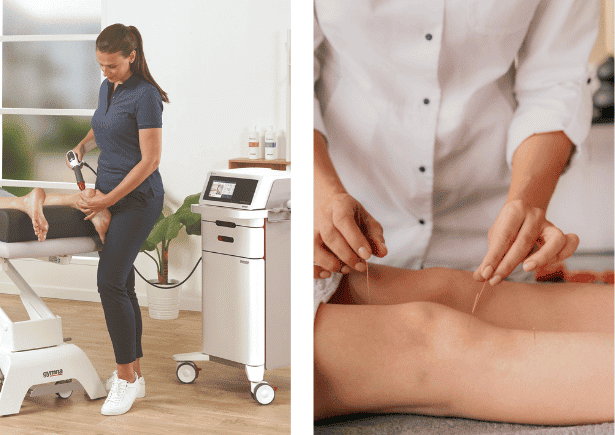
This approach is frequently substantiated in scientific literature. Moreover, shockwave therapy is highly versatile and can also be used on location with a mobile device. For example, the lightweight and portable ShockMaster 300, equipped with Gymna's pGTS (patient Guided Therapy System), allows you to quickly and easily tailor your treatment session to each patient's needs using pre-programmed and clinically proven treatment programmes.
Discover what ShockMaster 300 can do for you
Chris notes that many of her fellow sports physiotherapists use ultrasound to support treatment, but she chooses not to. Chris:
"Proper diagnosis with ultrasound requires both extensive experience and a reliable device. If you only use ultrasound occasionally, you don’t have either. That is why I prefer to refer patients to a physiotherapist who can fully meet those requirements."
Once the patient has reached the right baseline, Chris moves them to the exercise room for sports-specific exercise therapy, focussing on building both general and sport-specific load capacity.
The sports physiotherapist and acute injuries
Sports physiotherapists also often deal with acute injuries. In these cases, it is crucial to cool the injured area as quickly as possible to reduce pain and limit swelling. While a cold pack can help more precise and controlled cooling can be achieved with a device specially designed for safe and effective application.
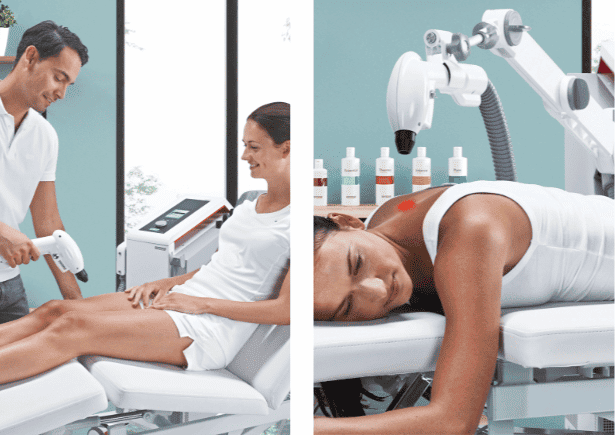
The Gymna Cryoflow ICE-IR, for example, features a unique infrared feedback system that ensures optimal temperature control, safe application and maximum cooling results.
Discover the Gymna Cryoflow ICE-IR
The consequences of a long-standing complaint
Sports physiotherapists also treat athletes with long-standing complaints. According to Chris, the duration of the complaint makes a significant difference.
"Someone who been experiencing complaints for only three months is generally flexible and recoverable, which is very different from someone dealing with complaints for three years With tendon complaints in particular, patients often continue exercising and only come to see me after years."
The problem is that the longer a complaint persists, the less resilient the tissue becomes. Compensation by other parts of the chain can lead to new complaints. Continuing to exercise with complaints and pain for too long also has mental consequences-athletes often lose confidence in themselves and in their bodies, which affects both their performance and their physical recovery. It is therefore important to consult a sports physiotherapist early.
Percutaneous electrolysis for chronic tendon injuries
Fortunately, patients who did not seek help immediately still have reason for hope of recovery. There are several effective treatments for chronic tendon injuries, and one innovative treatment method with proven effectiveness[i],[ii] is percutaneous electrolysis. Chris herself is not specialised in percutaneous electrolysis, but she certainly recognises its benefits.

This treatment works by activating the inflammatory process, which triggers biological mechanisms that produce new immature collagen fibres. These new fibres are then matured through electrical stimulation. Many (sports) physiotherapists are particularly enthusiastic about combining (eccentric) exercise therapy with the Gymna Acure 250. Its handy handpiece, anatomical library and pre-programmed treatments make the Acure easy to integrate into treatments.
Learn all about the Gymna Acure 250
Extra treatment convenience for the sports physiotherapist
Many sports physiotherapists work across multiple locations, making mobile treatment solutions more than just a luxury. This is particularly true for physical therapy, a great treatment modality for acute pain relief and muscle stimulation. Gymna's new modular platform for physical therapy Elexeo, equipped with a battery, is designed for exactly this purpose. With Elexeo, you can easily combine your desired physical therapy modules into a single device with one intuitive user interface. You can expand your setup at any time with additional modules for electrotherapy, ultrasound or vacuum therapy. Its compact size makes Elexeo perfect for use on the go, and with the battery module, it can easily be used on the field or right in the middle of the gym.
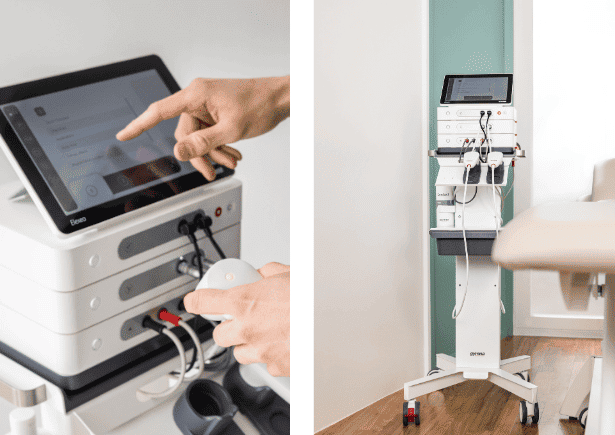
View the Elexeo modular platform
Tip from master sports physiotherapist Chris
When asked for her advice on achieving a quick recovery, Chris is quick to respond :
"In sports physiotherapy, a good recovery is more important than a quick recovery. Make sure you address all the factors that may play a role, and you will ultimately achieve the fastest results."
We thank Chris for the candid conversation about the surprising versatility of her profession. By combining various treatment modalities, she achieves maximum results for her patients - something every physiotherapist strives for.
Would you like to expand your treatment options?
If this article has inspired you to broaden your practice with new treatment equipment or to learn more about what Gymna has to offer, such as shockwave therapy or percutaneous electrolysis visit gymna.com or contact us without obligation. Together, we can explore the solutions that best suit you and your practice.
[i] Abat, F., Sánchez-Sánchez, J. L., Martín-Nogueras, A. M., Calvo-Arenillas, J. I., Yajeya, J., Méndez-Sánchez, R., Monllau, J. C., & Gelber, P. E. (2016). Randomised controlled trial comparing the effectiveness of the ultrasound-guided galvanic electrolysis technique (USGET) versus conventional electro-physiotherapeutic treatment on patellar tendinopathy. Journal of experimental orthopaedics, 3(1), 34. https://doi.org/10.1186/s40634-016-0070-4
[ii] Abat, F., Gelber, P. E., Polidori, F., Monllau, J. C., & Sanchez-Ibañez, J. M. (2015). Clinical results after ultrasound-guided intratissue percutaneous electrolysis (EPI®) and eccentric exercise in the treatment of patellar tendinopathy. Knee surgery, sports traumatology, arthroscopy : official journal of the ESSKA, 23(4), 1046–1052. https://doi.org/10.1007/s00167-014-2855-2
Share this article


 +32 89 510 532
 info@gymna.com


